
The Lone Knight
The Extraordinary Life Story of Sir Ralph Bagenal
Family History
Family history is, for most people, a private fascination. However absorbing it may be to the researcher, it rarely translates into something that others outside of the family circle are eager to hear. At times, it can feel a bit like looking through someone else’s holiday photographs. So when I began, in the spring of 2025, to seriously trace my own ancestry, I did so with modest expectations.
I had dabbled before, never with much persistence, and assumed that whatever I found, if anything at all, would remain of interest only to myself and a handful of relatives. As is often the case, many long-standing family myths quickly fell away under this fresh scrutiny. There was no Spanish chemist lurking in the 19th century branches of the tree, nor any connection to a transported convict artist who now has a collection in the National Library of Australia.
That one was particularly disappointing, as rather bizarrely, in the mid-2000s, my father had received a phone call from that very institution about the ancestral line and was asked for a comment regarding an exhibition that was about to take place! If I am connected to the convict artist Joseph Lycett, I couldn’t find the link.
What remained though was solid, respectable and predictably unremarkable. Perhaps I’m being too harsh there, because tracing your family’s line back to the late 1500s is, in its own way, very cool indeed. Overall though, it was 450 years rooted in Staffordshire, lives lived locally, histories that mattered to me and my father, but nobody beyond; and that was fine.
Then, as I was compiling my research together in early May, and closing my various online genealogy accounts down, one final connection on the suggestion tree revealed a name I had never seen before. What followed was a life story that moved through the very centre of Tudor England, shaped by ambition, survival, risk, and, at one crucial moment, truly remarkable defiance.
It was the tale of the son of a provincial merchant, who went on to become a courtier, a knight, a parliamentarian, and a man who would stand alone against the religious convictions of a reigning monarch. The piece that follows is as complete as can be hoped for with such a comparatively little known figure. In many ways, I’m surprised just how much I was able to learn.
This is the story of Sir Ralph Bagenal, my thirteenth great-grandfather.
Son of a Tailor
I’d always wished there was still a castle in Newcastle-under-Lyme. Growing up in nearby Stoke-on-Trent, and having an interest in history from being a child, I began to ponder the question of a ‘new’ castle when I was about ten. Where was it? And did that mean there was also somewhere to be found an ‘old’ castle too? Was it even a real castle?
Of course, I now know there was indeed once a very real castle in the town. Built in the 1140s, replacing an older fortified site in Chesterton, the market town grew around the stronghold during the 12th and 13th centuries, at which point it had been rebuilt in stone. It fell out of use, however, and when Ralph Bagenal was born in the town in 1509, there was little of use left save for ‘one great tower’ as recorded by John Leland later that century.
Today, you can still visit the foundations of the gate house and spot the motte in a local park. It’s not much to look at. Still, 500 years ago, it would have given the locals a sense of identity I’m sure, and it was here that the tailor John Bagenal would raise his son Ralph, and his brothers, through the early part of the 16th century.
Between 1519 and 1533 John would serve as mayor of the town on five occasions, which can perhaps give us some idea as to the true situation of the family. Well respected, and powerful locally too - but far from aristocratic - yet a family for whom opportunities were far more plentiful than most. Although John Bagenal was known to be a tailor at this time, we’d perhaps have a more accurate depiction of his standing if we took that title more broadly to mean that of a merchant.
A mayor in a provincial town during the early 16th century was almost always a locally exalted figure one way or another, and to achieve that office with such consistency would mark the family out as being the pre-eminent mercantile family in the town during the period.
We know nothing of Ralph’s life until he approaches 20 years of age, and when he does hit the historical record it is due to major trouble for the family, courtesy of his close-knit relationship with his younger brother, Nicholas. Born just a year after Ralph, Nicholas had, in 1538, killed a man in the Staffordshire town of Leek. Ralph was implicated alongside him, and together they fled to Ireland. This escape across the sea seems to have been something of a family sponsored evasion, likely due to the family’s political connections. Sir Patrick Barnewall, Master of the Rolls in Ireland, was married to the Bagenal brothers’ cousin, Anne Luttrell.
This trip to Ireland would begin a life-long association with the country for the brothers. Whilst there, Nicholas became involved with the circle of the Earl of Tyrone, and in December 1542, after four years away, he influenced the Irish Council to petition King Henry VIII directly in order to pardon the brothers for the murder in Leek.
The Royal Court
Returning to England in 1544, Nicholas would enter military service for the campaign in France, as Ralph entered into the court of the king. It was a life that Ralph seems to have taken to with gusto.
Come 1546 he is noted as a close confidant and drinking partner of the notorious gambler Edward Underhill, which perhaps helps explain the comments on him in the records of the time as being a ‘gamester, dicer and whoremonger’. One way or another, he was certainly making a name for himself - and it wasn’t doing him any harm.
Around this time he marries Mary Onley, widow of George Cotton of Combermere in Cheshire - and formally the Duke of Richmond’s governor - which landed him wealthy estates in Yorkshire. The reason for what happens next is unclear, but it certainly spurs the imagination, as following this lofty marriage and receipt of estates, just a year later, Ralph appears to be marrying again. This time to Elizabeth Whitgreave of Burton; the marriage from which I am ultimately descended.
1547 would prove to be a monumental year in the life of Ralph, and indeed in that of his brother Nicholas too. King Henry VIII had died in the January, and the nine year old King Edward VI, or rather his protective advisors, would quickly find useful positions for the brothers. That March, Nicholas was appointed Marshal of the Army in Ireland, and a little later in the year, Ralph would join the Duke of Somerset, chief protector of the young Edward, on campaign in Scotland.
During his last years on the throne, Henry had been desperately trying to shore up a Scottish alliance with the marriage of Edward to the infant Mary ‘Queen of Scots’. It hadn’t gone well, whereas elsewhere, a Scottish allegiance with France was looking increasingly likely. Henry had responded, as was his way, by launching a military campaign against Scotland.
Relations were now as sour as ever, but after his death, Edward Seymour, Duke of Somerset and now officially Lord Protector, picked up the baton of trying to forge an alliance once more. Well, forcing an alliance, perhaps, is more accurate, and in September of 1547, he led an army of more than 15,000 troops, supported by a fleet of 30 warships, into Scotland, where he would be met by the army of the Earl of Arran.
Battle was joined on Sunday September 10th, near the village of Inversek, in what is East Lothian today, around 60 miles south of the town of Musselburgh. With a naval bombardment coming from the coast, the Scottish force tried to force the issue on land and chaos ensued. Scottish pikemen caused heavy casualties in the English cavalry ranks initially but they stalled, and were caught in a manoeuvre involving a vanguard of experienced English soldiers and reinvigorated horse. Trapped in the boggy ground, an English eyewitness account described the terrible scene that unfolded;
‘The pitiful sight of the dead corpses lying dispersed abroad, some their legs off, and left lying half-dead, some thrust quite through the body, others with the arms cut off, their necks half asunder, many with their heads cloven, of sundry the brains bashed out, some others again their heads quite off, with other many kinds of killing. After that and further in chase, all for the most part killed either in the head or in the neck, for our horsemen could not well reach the lower with their swords. And thus with blood and slaughter of the enemy, this chase was continued five miles in length westward from the place of their standing, which was in the fallow fields of Inveresk, until Edinburgh Park and well nigh to the gates of the town itself and unto Leith, and in breadth from the Firth sands up toward Dalkeith southward. In all which space, the dead bodies lay as thick as a man may note cattle grazing in a full replenished pasture. The river ran all red with blood, so that in the same chase were counted, as well by some of our men that somewhat diligently did mark it as by some of them taken prisoners, that very much did lament it, to have been slain about 14 thousand.’
It was utter destruction for the Earl of Arran’s army, and it was there, in the aftermath of the battle, that Ralph was knighted, in a moment that formally elevated him into the ranks of the Tudor elite.
The Lone Knight
In the year after the battle, crucially, and perhaps somewhat deliberately, Ralph aligned himself not with the Duke of Somerset, whom he had fought under, but with John Dudley, the Earl of Warwick.
Somerset would fall from favour in 1549 following a series of rebellions against his overlordship in England that at one point, saw him effectively take the young king hostage. He would be arrested that October and eventually executed in 1552. Dudley would rise in his stead and Bagenal was rewarded for his support with the immensely lucrative Surveyorships of the Ports of London and Southampton. Then, in 1550, he became an official member of parliament for Staffordshire. At the age of 42, Sir Ralph Bagenal was one of the most preeminent members of the northern elite.
In 1551 he was again in Ireland, this time as Lieutenant of the Kings Army and member of the Privy Council. Ireland was a testing ground for Tudor governance, a place where authority was asserted, negotiated, and often contested. To be entrusted with military and administrative responsibility was a sign of considerable confidence.
No doubt, the connections made by the Bagenal brothers time in the country a decade earlier would have helped grease the wheels of Ralph’s military career even further. The brothers would leave a lasting impression on history of Ireland too, particularly so in respect of Nicholas, who spent most of his later career in the country, with from whom the town of Bagenalstown in County Carlow takes its name.
If Ralph’s duties kept him largely absent from England, they did not at all diminish his standing back home. In 1552, he secured the manor of Leek and Frith, and the lands of Dieulacres Abbey, near Leek; one of the many former monastic estates redistributed after the Dissolution. This acquisition tied him firmly to the lands of Staffordshire, and provided a substantial base of wealth. Trouble however, was on the horizon - and events of the mid 1550s would change Ralph’s world forever.
The death of Edward VI in 1553 brought bloody turbulence to England. As many fans of Tudor history will know, the death of Edward led to tussle for the throne between the Protestant Lady Jane Grey - cousin to the late king and the named successor in his will - and Mary Tudor, Edward’s catholic, half sister, and daughter of Henry VIII.
Bagenal, himself rising to prominence under Henry, was naturally a staunch church reformer, and he declared his support for Lady Jane Grey early on, openly aligning himself with the attempt to place her on the throne. It was a bold and dangerous decision. When Mary I emerged victorious, Jane being executed in February 1554, those who had not supported her ascent to the throne faced stern consequences. Bagenal was immediately stripped of his offices.
Returning to Staffordshire, Ralph leant on his family reputation locally and - just as his father had done - became mayor of Newcastle-under-Lyme. Re-entering Parliament as a result, it was in that role, on the 30th November 1554, that Ralph stood before Cardinal Reginald Pole, who was addressing the house to formally reconcile England to the catholic authority of Rome. The moment was one of profound symbolic importance.
Each member of the Lords and Commons knelt in submission. Well, almost all. Ralph, alone, refused, declaring that he had sworn the contrary under Henry VIII, whom he said, had laboured for decades to remove papal authority from England. To reverse that position now, he stated plainly, was something he would not do. This was not a theatrical gesture. It was a statement of principle, made in a setting where conformity was expected and dissent could be dangerous. In that moment, Sir Ralph Bagenal stood apart, and it is perhaps the one time his actions really have been remembered to history; the moment was directly referenced in Tennyson’s 1875 play Queen Mary.
Elsewhere during 1555, a conspiracy had been at play. In the failed attempt to put Lady Jane Grey on the throne, John Dudley, formally Earl of Warwick and now Duke of Northumberland - and Ralph’s patron - had undertaken a campaign to bring a French army into England to support the cause. Foiled, Dudley was arrested in France, and confessed all. It would seem that Sir Ralph Bagenal was himself involved, as while history doesn’t leave the facts of such to us, it would go a long way in explaining what he did next.
Firstly, he returns to Ireland to settle his affairs before transferring his Staffordshire lands to his brother Nicholas. Then, as Nicholas is sponsored to enter parliament in Ralph's stead, Ralph fled to France. In December 1556 he is charged in his absence. The message is clear; should he return to England, he will be arrested, tried and more than likely, executed.
Soon however, the ever-shifting political situation between England and France presented Ralph with an opportunity. In the lead up to the Anglo-French war of 1557, effectively a sideshow to the Italian Wars that involved the still-English port of Calais, a pardon was issued, seemingly on condition that he return to London and, using his knowledge of the French culture and language, assist in the interrogation of prisoners at the tower.
The accession of Elizabeth I in 1558 formally marked a turning point for him. As a committed Protestant, Ralph was now aligned with the religious direction of the Crown. He returned to Parliament once more and resumed his place in Staffordshire society. Yet this restoration was incomplete.
In reclaiming his estates - previously leased out by his brother during his exile - he incurred heavy financial costs and by the 1560s, he was deeply indebted. Letters from the period reveal a man seeking assistance, appealing to figures such as Sir Nicholas Throckmorton for support and office. He obtained little. A grant issued in 1572, allowing him to compound fines for clerical offences, provided some income, but his aggressive enforcement of the right provoked complaints, and it was eventually curtailed by the Privy Council. Meanwhile, he sold his lands piece by piece, often at low prices, simply to meet his obligations.
Occasionally in the record this has been interpreted as an altruistic endeavour. His sale of the tithe rights for Longsdon and Endon in 1560 for reasonable figures, and a note that in 1563, tenants of mills in Leek are recorded as being able to ‘grind their corn where they pleased’ on his lands, are likely financial arrangements reflecting Ralph’s dire situation and little more. In 1565 he is noted still as ‘Lord of the Manor’ when he grants Ball Haye, Leek, to Henry Davenport, again at a reasonable price.
These sales are likely one and all to former tenants of the abbey, and therefore easy, ready-made, low cost, low hassle deals for the families that had worked the land for dozens, if not hundreds, of years. Ten years later, in 1575, he makes a plea directly to the Privy Council, explaining that his poverty is a result of his sacrifice to the Protestant cause and the retribution of the catholic Marian regime of the mid 1550s.
Bagenals later life stands in stark contrast to his earlier ascent. Where once he had accumulated land and office, he now disposed of them. Where once he had moved within courtly circles, he now petitioned for support.
Sir Ralph Bagenal died in Leek in early 1580 without leaving a will, and is recorded as advising his son, Samuel ‘to advance himself by his valour, as he before had done’. It was a fitting summary of a life defined by action, risk, and ambition. His story is not one of steady advancement, but of repeated reinvention, shaped by the instability of Tudor England. And yet, what makes Bagenal remarkable is not simply the manner of his ascent, from the son of a tailor to a figure moving among monarchs, but that he endured. Through exile, disgrace, restoration, and decline, he remained a participant in the central dramas of his age.
Above all else, as witnessed by Tennyson’s poem, he is remembered for that single, extraordinary moment, when, in a chamber full of kneeling men, he chose to stand. It is that act, more than any office or title, that defines him as a most remarkable son of Staffordshire’s Tudor history.
Eli Lewis-Lycett 2026
Sources and Further Reading
Regarding the life of Sir Ralph Bagenal;
- The History of Parliament: The House of Commons 1558–1603. 3 vols. London: HMSO, 1981.
- Cokayne, George Edward. The Complete Peerage. London: St Catherine Press, various volumes.
- Hasler, P. W., ed. The History of Parliament: The House of Commons 1558–1603. 3 vols. London: Her Majesty's Stationery Office (HMSO), 1981.
Regarding associated local history;
- Leland, John. The Itinerary of John Leland in or About the Years 1535–1543. Edited by Lucy Toulmin Smith. London: George Bell & Sons, 1907–10.
- Sleigh, John. A History of the Ancient Parish of Leek, in Staffordshire. Leek: Robert Wall, 1862.
- Shaw, Stebbing. The History and Antiquities of Staffordshire. 2 vols. London: Nichols & Son, 1798–1801.
- Greenslade, M. W., ed. A History of the County of Stafford. Various volumes. London: Victoria County History.
Regarding the Bagenal's in Ireland;
- Bagwell, Richard. Ireland Under the Tudors. 3 vols. London: Longmans, Green & Co., 1885–90.
- Lennon, Colm. Sixteenth-Century Ireland: The Incomplete Conquest. Dublin: Gill & Macmillan, 1994.
- Ellis, Steven G. Tudor Ireland: Crown, Community and the Conflict of Cultures, 1470–1603. London: Longman, 1985.
Regarding the Battle of Pinkie;
- Merriman, Marcus. The Rough Wooings: Mary Queen of Scots 1542–1551. East Linton: Tuckwell Press, 2000.
- Patten, William. The Expedition into Scotland of the Most Worthily Fortunate Prince Edward, Duke of Somerset. London, 1548.
Regarding the world of Tudor politics;
- Loades, David. The Tudor Court. London: Batsford, 1986.
- Loades, David. Elizabeth I. London: Hambledon Continuum, 2003.
- Alford, Stephen. Kingship and Politics in the Reign of Edward VI. Cambridge: Cambridge University Press, 2002.
- Doran, Susan. Mary I. London: British Library, 2008.
A variety of online resources are also used including British History Online, Historic England, various genealogy databases and folklore collections. For any further specifics, please contact the author directly.
Additional Material
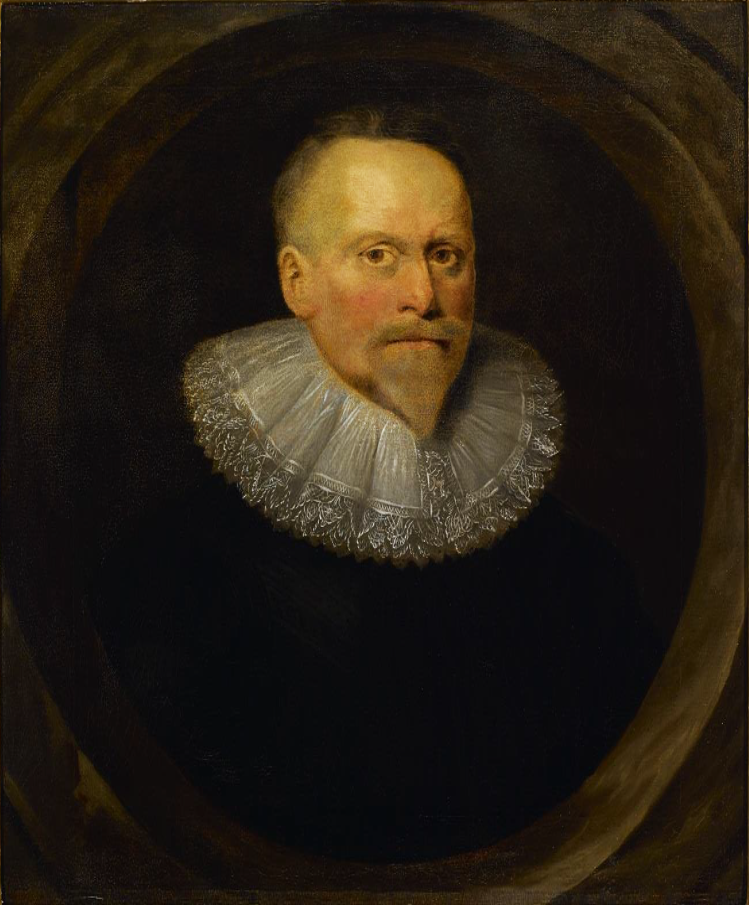
Portraits of Ralph's brother Nicholas Bagenal (unkown artist, Wikipedia)
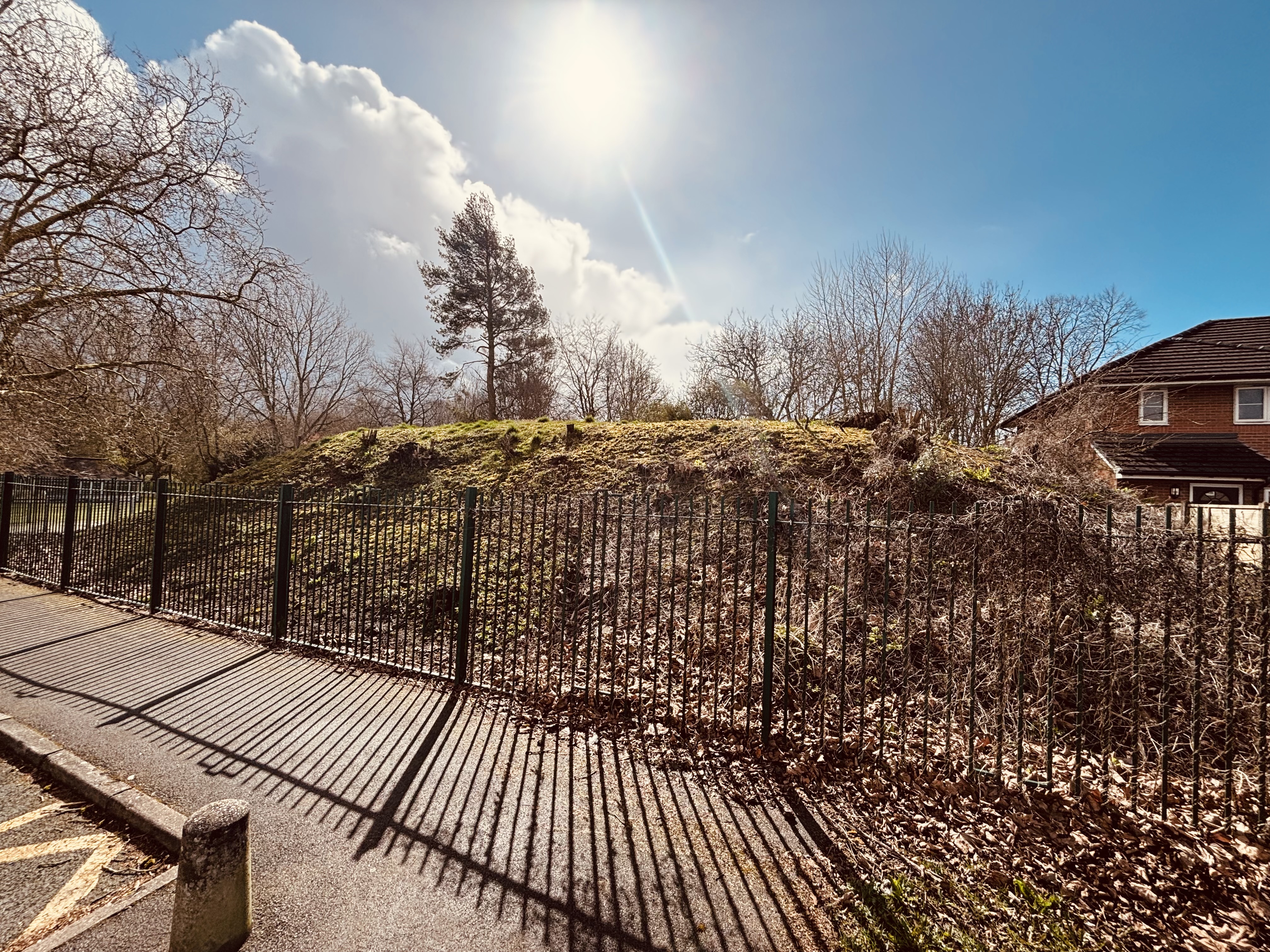
The motte of the castle at Newcastle-under-Lyme today